


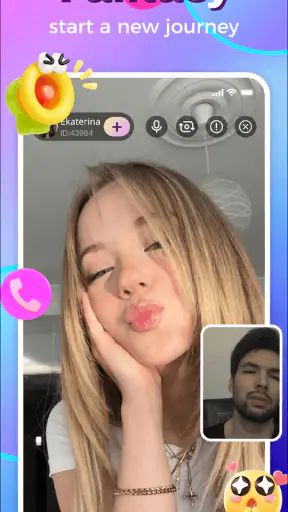
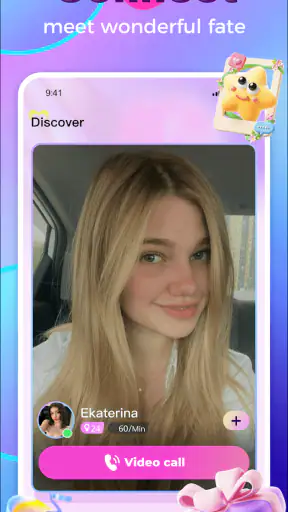
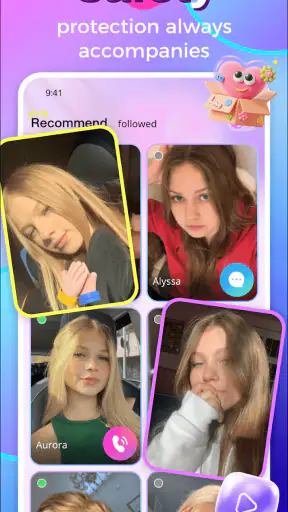
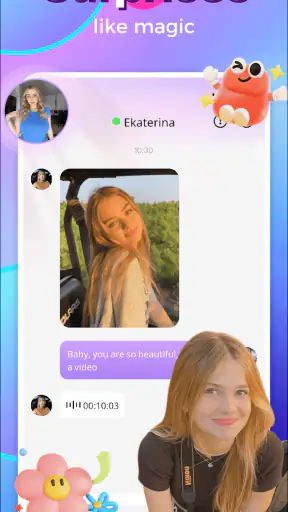
I approached Magic: Online Video Chat as a personalization app with a social purpose rather than as another ordinary dating profile service. Its focus is live adult video chat, random matching, dating, and meeting people, so the experience depends less on building a polished public profile and more on how comfortably you can move from one conversation to the next. I found that distinction important: this is designed for immediate interaction, not for quietly browsing an extensive catalogue of profiles.
The app is developed by Hong Senwei and is free to install, although it includes optional purchases ranging from $0.99 to $154.99 per item. It carries a Mature 17+ age rating, which fits the adult-oriented nature of its conversations. It was released on May 22, 2024, and the current version is 1.2.1. Android users need version 6.0 or later. Its average rating sits at 4.0 from around 8.5 thousand ratings, while the app has passed five million installs. Those figures suggest that it has reached a sizeable audience, but they do not remove the need to judge whether its fast, video-first style suits you.
How the interface feels when readability and navigation matter
The central appeal is easy to understand. You open the app looking for a live social exchange, and the concept of random matching gives you a quicker route to conversation than a traditional dating app where you may spend a long time swiping, reading biographies, and waiting for a mutual match. In my experience, that makes Magic feel more immediate and less like a personal catalogue.
That immediacy also shapes the way I think about its navigation. A person who prefers a small number of clear choices may appreciate the direct purpose of the service: start looking for a conversation, decide whether to continue, and move on when the interaction is not right. Someone who needs time to read detailed profiles before engaging may find the random element less comfortable. The app’s concept puts pressure on the moment, so it rewards users who can make quick decisions about whether a chat feels appropriate.
Readability is not only about font size. In a video-chat app, the screen is likely to be visually busy because the other person’s face, conversation controls, and status information compete for attention. I would use it in portrait orientation first, keep the phone at a stable distance, and avoid trying to read while walking or multitasking. That simple habit makes the experience easier to follow and reduces the chance of tapping something accidentally.
I also recommend treating the first few sessions as an orientation period. Rather than beginning with a long conversation, I would test how quickly I can locate the matching action, end a chat, and return to the main screen. This is a useful workflow for anyone with dyslexia, reduced concentration, or limited familiarity with fast-moving social apps. Learning those three actions before becoming deeply involved in a conversation gives you more control when the screen becomes distracting.
The short store description is simply “Magic,” which tells a prospective user very little about the actual experience. The fuller purpose is clearer once you understand that the app combines adult video chat with dating and friendship-oriented matching. I would not choose it expecting the structured discovery tools of a conventional dating platform. Its strength is the direct encounter, while its weakness is that the same directness leaves less room for careful preparation.
Making conversations manageable for different motor and sensory needs
Video chat can be demanding for people with tremors, reduced dexterity, limited reach, or difficulty holding a phone steadily. A practical setup is to place the device on a stand instead of gripping it throughout the conversation. That leaves one hand free for controls and reduces fatigue. It also keeps the camera angle more consistent, which makes the interaction feel less awkward for both people.
For users who experience sensory overload, random matching deserves particular attention. Every new conversation can bring a different face, voice, pace, and background. I would use the app for short sessions rather than leaving it open indefinitely, especially if sudden changes in sound or visual movement are tiring. A quiet room, headphones at a comfortable level, and a predictable stopping point can make a meaningful difference.
People with hearing difficulties may find live video more challenging than text-based dating because understanding depends on audio quality, speech clarity, and the other person’s willingness to communicate patiently. I would not assume that every conversation will be easy to follow. If you rely on captions, sign language, lip-reading, or written clarification, the app may be less suitable than a service built around messaging. The video format can offer human connection, but it can also expose communication barriers very quickly.
Vision-related needs create a similar trade-off. A face-to-face conversation can be more personal than reading a profile, yet small controls and changing visual content may be harder to manage. I would increase the phone’s system text size where possible and avoid using the app in a dim room, because glare and low contrast can make a social interaction unnecessarily tiring. These are device-level adjustments rather than promises about special accessibility tools inside Magic, but they can improve the basic experience.
One non-obvious advantage of live interaction is that it can reduce the need to compose a perfect written introduction. Someone who finds long typing sessions painful or slow may prefer speaking directly. The trade-off is that speech becomes the main route into the conversation, so users with speech-related disabilities or anxiety may feel more exposed than they would in a text-first app. For that group, a platform with robust messaging should probably come first.
Using the app safely and comfortably in everyday situations
The most realistic use case is a private evening at home when you want a spontaneous conversation without committing to a full dating routine. I can imagine opening Magic after work, trying a few random matches, and stopping after finding one conversation worth continuing. That is simpler than maintaining several chat threads on a conventional dating service, but it also means the quality of the experience can change sharply from one match to another.
I would avoid using it in public places, shared offices, public transport, or anywhere another person could appear on camera without consent. The adult video-chat format requires more privacy than a normal messaging app. A private room is not just a comfort preference; it helps protect your own personal space and prevents bystanders from being pulled into a conversation accidentally.
Situational access also includes internet reliability and attention. Video is a poor fit for a crowded commute, an unstable connection, or a place where you cannot hear clearly. If your daily routine gives you only short breaks, random matching may be convenient, but you should begin only when you have enough time to end a conversation calmly. Rushing can make it harder to notice uncomfortable behaviour or to leave before the interaction becomes stressful.
I would also separate curiosity from commitment. Because the app is free to install, it is reasonable to try the basic experience before spending anything. The optional purchase range is broad, and the highest listed item is $154.99, so I would review every purchase prompt carefully and avoid paying simply because a conversation feels urgent or emotionally intense. My strongest practical advice is to explore the free experience first and treat in-app spending as a deliberate decision, never as part of the pressure of a live chat.
Another useful habit is to decide your boundaries before matching. For example, I would choose in advance whether I am comfortable showing my face, discussing personal details, or continuing with someone who pushes for a faster level of intimacy. Making those decisions beforehand is especially helpful for users who find spontaneous social pressure difficult. It turns an unpredictable interaction into one where you still have a personal plan.
The app may work for adults who want low-friction social contact, casual dating, or a chance to meet someone outside their usual circle. It is less convincing for a user seeking detailed compatibility filters, carefully verified identity, slow relationship building, or a calm text-only environment. In those situations, a traditional dating app or a friendship community with stronger profile and messaging tools would be a better match.
Where the experience still creates barriers
The biggest barrier is the random nature of the service. Random matching can help people avoid endless browsing, but it gives users less control over the starting point. If you need predictable topics, specific communication preferences, or time to assess someone before enabling video, the format may feel too abrupt. I see this as a fundamental design trade-off rather than a small inconvenience.
The adult rating is another important boundary. Magic is not an app I would recommend to children, younger teens, or anyone who is uncomfortable with adult-oriented social interaction. Parents should not treat the free download or large install count as evidence that it is appropriate for a younger household member. The 17+ rating should be taken seriously when deciding whether the app belongs on a shared device.
There is also an emotional barrier that does not appear in a feature list. Live video removes much of the distance that makes online dating feel manageable. A rude comment, an uncomfortable request, or an abrupt ending can feel more personal on camera than in text. I would expect users to need a clear exit habit: end the chat as soon as it stops feeling respectful, rather than staying to be polite.
Accessibility can be affected by the other participant as much as by the interface. A patient conversation partner may repeat themselves, slow down, or adapt to written clarification. Another person may do none of those things. That variability means the app can be welcoming in one session and difficult in the next. Users with specific communication needs should view this unpredictability as a central consideration, not a minor exception.
Privacy is another reason to be cautious. I would keep identifying details out of early conversations, avoid sharing a workplace or exact location, and remember that anything visible on camera can reveal more than intended. A background, document, uniform, or distinctive landmark may disclose information without a user noticing. Preparing the room before opening the camera is a small but worthwhile step.
Finally, the app’s 1.2.1 version indicates an evolving product rather than a mature, settled service. That does not make it unusable, but it encourages me to keep expectations realistic. I would check the app’s current behaviour after updates, especially if navigation or purchase prompts change, and I would not build an important relationship routine around it without first confirming that it consistently fits my needs.
Who should try it, and who should choose something else
I would recommend Magic to an adult who wants spontaneous video conversations, accepts the unpredictability of random matching, and can comfortably manage live social pressure. It is particularly appealing if you dislike writing elaborate profiles and would rather judge chemistry through a short conversation. The fact that it is free to install makes a cautious trial possible, provided you keep purchases separate from the excitement of meeting someone.
I would steer a different user toward a text-led dating or friendship app if they need time to process information, use assistive communication, prefer strong search filters, or want to establish trust gradually. A profile-based service may also be better for someone who feels uncomfortable appearing on camera immediately. In that setting, you can often control the pace more carefully and decide when a video call is appropriate.
For someone with limited motor control, I would not reject Magic automatically. A phone stand, a stable surface, and short sessions could make the app workable. However, I would test the basic controls before becoming invested and would stop if ending a chat or navigating the interface requires uncomfortable precision. The app’s social value is not worth sacrificing physical comfort or a sense of control.
For someone with sensory or hearing-related needs, the decision depends heavily on whether live video is a benefit or a burden. If facial expression and direct conversation help you connect, the format may be rewarding. If background noise, rapid speech, or unpredictable visual changes make communication exhausting, a messaging-first alternative is likely to serve you better. That is why I would describe Magic as potentially inclusive in context, but not universally accessible by default.
My inclusive verdict after looking beyond the novelty
Magic: Online Video Chat has a clear identity: it brings adult video conversation, dating, friendship, and random matching into one fast-moving experience. I like that it can bypass the slow routine of profile browsing and give a confident user a direct way to meet someone new. I also appreciate that the free installation lowers the barrier to testing the concept before making any purchase.
At the same time, the very feature that makes it interesting can make it difficult. Random matching reduces control, live video increases social and sensory demands, and the adult setting requires strong personal boundaries. Users who need predictable navigation, detailed preparation, text-based communication, or a slower route into trust may find the usual alternatives more comfortable.
My final view is cautiously positive for the right audience. I would try it in a private setting, learn the exit controls first, keep sessions short, protect personal information, and ignore purchase pressure until I knew the service suited me. For adults who want immediate, face-to-face discovery, it can be a refreshing change from endless swiping. For anyone whose access needs depend on captions, careful pacing, extensive filtering, or low-pressure communication, I would choose a more structured platform instead.
In short, the app’s value is not simply that it connects strangers on video. Its real test is whether you can remain comfortable and in control while that connection happens. If your answer is yes, Magic offers a distinctive social experience. If the format itself creates stress, no amount of spontaneous matching will compensate for the barriers.


